Elevate Your Podcast Brand with Professional Social Media Templates
Consistency is the silent engine behind every recognizable podcast brand. You pour hours into recording, editing, and perfecting your audio, but the visual side often gets squeezed into whatever time is left. That’s where having the right design assets changes everything. A collection of professional, clean, and modern podcast talk show social media templates gives you a head start that feels polished rather than templated. These aren’t generic graphic kits—they’re built specifically for the rhythms and realities of podcast promotion.
Designed for Real-World Use Across Platforms
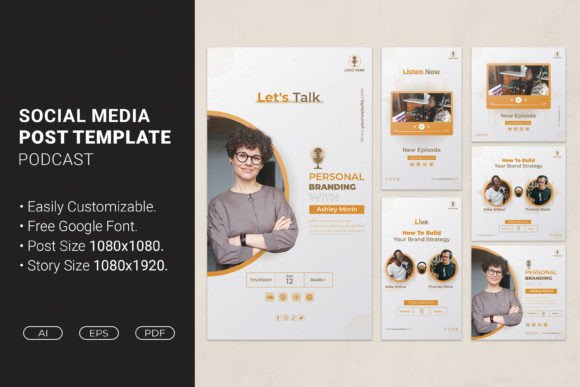
What makes these templates stand out is their practical readiness. Each design is sized and structured for immediate deployment on Instagram, Facebook, LinkedIn, and other major platforms. You get 1080 x 1080 px square posts for your feed and 1080 x 1920 px story posts that command attention in vertical scrolling. The graphics maintain high-resolution quality, so whether you’re sharing a guest announcement, a quote card, or an episode teaser, everything appears sharp and professional on any screen.
The visual personality here leans into modern minimalism with bold typographic hierarchy and clean layout structures. There’s a deliberate balance between space and content—enough breathing room to let your message land without clutter. These templates work beautifully for interview-style shows, solo commentary podcasts, or panel discussions because their aesthetic adapts to your content rather than imposing a rigid style. The overall appeal lies in that flexibility: they feel premium without being pretentious.
Customization That Actually Saves Time
One of the biggest frustrations with design templates is when editing feels like more work than starting from scratch. That’s not the case here. Every element is built for easy customization. Editable text, images, and colors mean you can swap out your podcast name, adjust the color palette to match your brand identity, and insert your own photography or artwork without wrestling with complicated layers. The simple image placement via clipping mask is particularly thoughtful—drag your photo into the designated area, and it clips cleanly into the shape or frame provided.
For designers and non-designers alike, this approach removes friction from the creative process. A small business owner promoting their weekly industry podcast can update templates in minutes rather than hours. A content creator managing multiple shows can maintain visual consistency across episodes without a dedicated design team. The included free fonts further streamline setup, and the documentation file makes finding and installing those typefaces straightforward.
File Formats That Fit Your Workflow
Flexibility extends to the technical side as well. These podcast social media templates come in Adobe Illustrator, EPS, and PDF file formats. If you’re comfortable working in Illustrator, you get full control over every vector element. EPS files ensure compatibility across a range of design software, from CorelDRAW to Affinity Designer. PDFs work perfectly for quick reviews or printing needs. This multi-format approach means the templates integrate into whatever creative workflow you already have, whether you’re a seasoned graphic designer or a hobbyist learning as you go.
Where These Templates Deliver the Most Impact
Think about the moments that define your podcast’s visual presence. Episode announcements on Instagram. Guest reveal graphics on Facebook. Audiogram teasers on LinkedIn. Quote cards shared across platforms. These templates cover that entire spectrum with cohesive design language. For entrepreneurs and marketers, they provide a consistent brand identity without the overhead of commissioning custom social media graphics for every episode. For bloggers and publishers, they offer a quick way to cross-promote audio content alongside written pieces.
The designs also serve well beyond social feeds. Use them as a foundation for web design elements on your podcast landing page. Adapt the layouts for packaging design if you sell merchandise or physical media. Pull the typographic style into editorial design for show notes, newsletters, or digital magazines tied to your podcast. The clean, modern aesthetic translates across these contexts because it prioritizes clarity and visual hierarchy over decorative excess.
Building Brand Recognition Through Visual Consistency
Audiences recognize podcasts not just by voice but by visual pattern. When every episode graphic shares the same design DNA—consistent spacing, recurring color accents, familiar typographic treatment—listeners start to associate those visual cues with your show before they even read the text. That’s brand recognition in action, and it doesn’t require a massive marketing budget. It requires thoughtful design assets applied with intention.
These templates support that goal by providing a cohesive system rather than isolated graphics. The square and story formats share stylistic elements, so your feed looks unified whether someone encounters a post or a story. That kind of visual consistency signals professionalism to potential new listeners scrolling through crowded social platforms.
Practical Tips for Getting Started
Before diving in, take a few minutes to define your podcast’s color palette and primary typeface preferences. Knowing whether you lean toward bold sans serif fonts or more editorial serif styles will help you customize the templates faster. Test a few variations with your actual content—drop in a real episode title, use a genuine guest photo, apply your brand colors. Seeing the templates populated with your material reveals how well they serve your specific show.
Pay attention to readability at smaller sizes, especially for Instagram feed posts viewed on mobile. The templates are designed with this in mind, but always preview on your phone before posting. Experiment with font pairing if you want to introduce a secondary typeface for subtitles or quotes. And remember that while the preview images show specific photographs and stylistic choices, those are demonstrations—the real value is in the structure and design framework you’ll make your own.
For anyone managing a podcast’s visual presence alongside the actual production work, having reliable, easy-to-customize templates isn’t a luxury. It’s a practical solution that keeps your brand looking sharp while freeing up creative energy for the content that matters most.